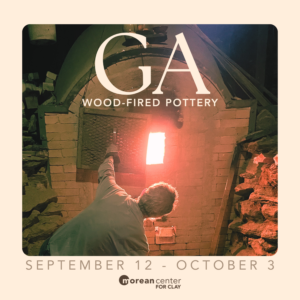
 Opening Reception: Saturday, September 12, 5-9PM
On View: September 12 – October 3
Morean Center For Clay – 420 22nd Street South
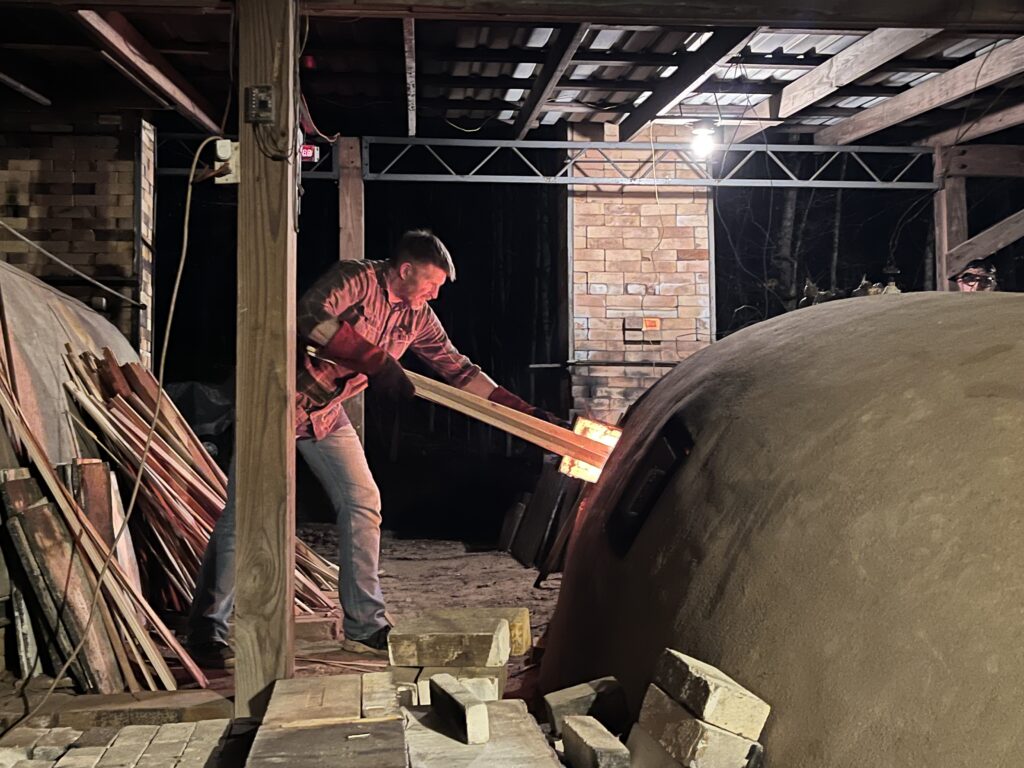
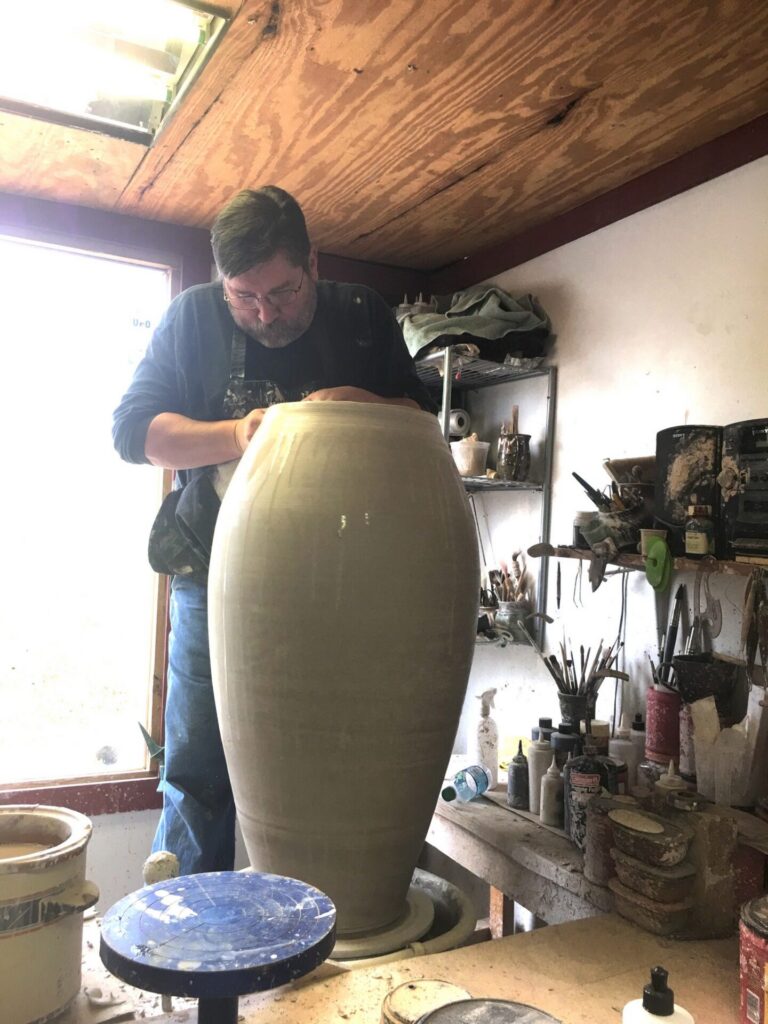
This touring exhibition brings long-overdue attention to Georgia’s vibrant woodfiring tradition. The Contemporary Woodfire Potters of Georgia exhibition showcases a multigenerational collective of artists whose practices span folk pottery lineages, Japanese kilntraditions, and contemporary ceramic artistry—united by a shared devotion to the centuries-old craft of woodfiring. The group includes some of the most influential names in Southern pottery, among them legacy potters with more than 30 years of firing experience such as Roger Jamison, Geoff Pickett, Jon Brinley, and Allen Gee, as well as studio innovators including Stephen Hawks, and Ron Meyers. Equally central to the movement are the next generation of fire chiefs and apprentices—Rebecca Wood, Kyle Jones, and Liz Bloodgood—and a rising cohort of nationally recognized ceramic artists including , Linda Suskin, Kimberly Shelton and Joel Huff.
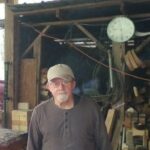
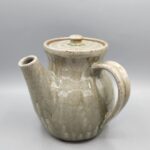
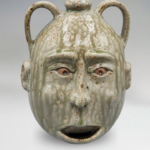
“I live in rural Meriwether County at the location of the former Gordy Pottery.
Working in this historical environment has enhanced my appreciation and
perspective of mid-twentieth century potters who had to adapt their methods to
changes in technology and customer’s preferences.
My pots are made from stoneware that I mix from Georgia clays. My glazes are
derived from local minerals and materials including a gneiss-hornblende stone,
wood ashes, ground glass and feldspar. The pottery is fired in a wood burning kiln
were it reaches temperatures hot enough to melt the homemade glazes and
vitrify the clay.
My interest in pottery began when I took a ceramics course in college. Using
Georgia’s natural clay and minerals to make pottery appealed to me as a creative
process. I worked two years as a production potter in Macon to hone my skills.
I was born in Statesboro, GA and grew up in a rural farming community. Summers
were spent helping with the tobacco harvest on my grandfarther’s farm. I
attended Georgia Southern University and obtained a degree in Industrial Arts
Educaton.
My goal is to produce pottery that you will use and enjoy.”
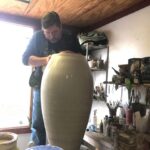
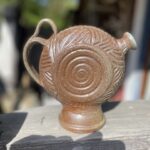
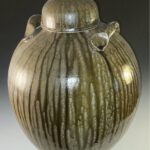
“After years of collecting pottery with my wife Connie, I began making pottery in 1998. Joining
the local Parks and Rec center to learn the basics of wheel throwing, I soon realized I needed
more than they could offer. My love of wood fired pots has led me to explorations in clay, glazes,
kiln design and building, firing techniques, – subtle and not so subtle !!! My studio, located on the
property I grew up on, houses my wood kiln and two gas kilns that keep me exploring local and
regional sourced materials. From the influence of collecting and the history of pottery making in
the area, the evolution of my work has undergone many changes and growth. With the simplicity
of functional ware and the challenges of large vessels, I will keep pushing the limits of the
clay…always learning !”
Where to find my work: County Line Art Farm (studio) – Midland, GA
Artist Statement
“A lifetime ……. that’s the best answer I can give when someone asks how long it takes to make
a good pot. Always searching for the perfect clay or glaze, always testing, always learning. I
read somewhere that “it’s like raising children”- you do your best to make sure they are ready for
the world once you are able to let them go. As a working potter in West-central Georgia I am
committed to understanding locally sourced materials and using them in the same ways potters
of the Southeast and southern Appalachia have for centuries, but with a modern twist- only
controlling them to a point where each ingredient’s unique character will show. Each pot is an
expression of where it came from, and the unique properties of local materials offer exciting
advantages for this type of work, especially on the large scale pieces. Every aspect of the
process reveals itself- from the wood used to fire the kiln, the clay to make the work; the
minerals in the water for the glazes. Every element plays an important roll in the finished piece.
Each kiln load takes 3-4 months to throw, trim, dry and glaze. Taking up to a week to load the
kiln, setting each pot purposefully in the direction needed for the flame to hit it. Then after 24-28
hours of stoking wood into the nearly 100 cubic foot kiln, reaching temperatures above 2,400
degrees, it is left to cool down for 3-4 days. Another week of washing, grinding, cleaning up and
smoothing each piece so they can be sent on the next journey….yours.”
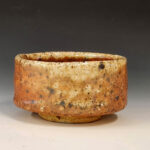
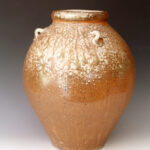
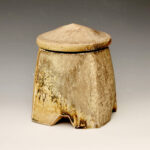
“I grew up on the plains of Kansas and attended the University of Kansas and Bethany College where I earned a Bachelor of Fine Arts degree in Studio Art in 1970. Following that, at Indiana University I received the Master of Fine Arts Degree in Ceramics in 1974. I moved to Macon, Georgia where I taught ceramics, drawing and design at Mercer University 1974 to 2009 when I retired to work full time in my studio.
My interest in firing with wood began in the 1970’s when my students and I began making burnished forms of local clay which were fired in a bonfire. In 1984 I built my first high-fire wood fired kiln at Mercer which we enjoyed firing every term. In 1986 I was invited to help Frank Boyden and Tom Coleman fire the East Creek Anagama in Oregon, a life changing experience which led ultimately to my building my own anagama.
In 1988 my wife Sherrie and I moved to a new home near Juliette, GA where I built a studio and began firing salt glazed ware in a small wood-burning kiln. I have operated a wood-fire pottery there since then. In 2000 I built a 250 cu. ft. Japanese style anagama kiln which is fired for up to 5 days with wood alone in order to achieve unique natural ash glazing effects. I replaced the wood-salt kiln with a larger one in 2010 and built the gas kiln in 2015.”
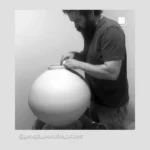
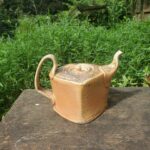
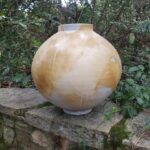
Experienced ceramic artist and educator with a strong background in kiln building, wood firing, and ceramic instruction. Over a decade of hands-on experience in both production pottery and teaching at various institutions. Adept in a wide range of kiln types and firing techniques.Accordion Content
Born: Devon, England 1955
Attended pottery classes in high school, 1971.
Foundation Course in Art, Bideford School of Art, 1973.
Made Devon slipware as apprentice to Harry Juniper, Bideford, Devon 1974- 1976
B.A., Three- Dimensional Design, Bath Academy of Art, Corsham, Wiltshire 1976.
Worked as a thrower at Lakes Pottery, Truro, Cornwall 1977-1980.
Journeyman travels in Asia and the U.S.A. 1981-1983.
MFA Ceramic Design, University of Georgia, Athens, GA 1986.
Resident studio potter, Berea College, Berea, Kentucky 1988-1990.
Full time independent potter since establishing Farmington Pottery, Georgia 1990- present
Currently firing three woodburning kilns separately designed for salt firing, soda firing and fly ash effects. Glazed porcelain tableware is fired in a downdraft gas kiln.

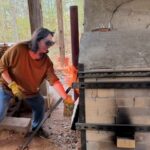
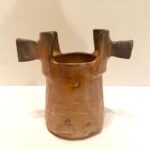
Inspired by nature, Linda F. Suskin has a (self-described) passion for throwing; and because of
her bias for more natural aesthetics, favors wood-firing. Born in South Africa, Linda has lived in
Atlanta, GA for over three decades… where she loves to explore new ideas at her wheel (in her
shed); and welcomes the opportunity to woodfire, and share with others who appreciate the
process and appeal too.”Accordion Content
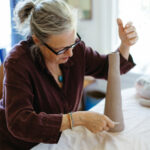
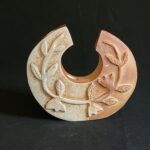
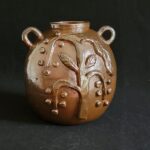
Rebecca Wood, 70, is a self taught potter. In 1991 she founded R.Wood Studio, where she created a line of popular terra cotta tableware with simple shapes and sumptuous colors. 33 years later, r.wood studio is still producing, with 7 employees and a large fan base. In 2003, Rebecca was invited to be in a show called ‘Perspectivesʼ, an exhibit of fifty Georgia potters. There she learned about the wide world of pottery and all the ways to makee it, and became fascinated with wood firing. For the last 20 years, she has created wood fired vases that are fired in the kilns of Geoff Pickett and Lori Breedlove in Farmington and Watkinsville,
Georgia.
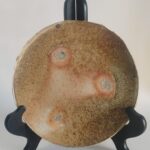

Joel Huff is an American outsider folk ceramics artist who was born and grew up in Atlanta, Ga. His first introduction to pottery was when he took a simple bowl making class and instantly fell in love with it. The experience was a meditation in motion; pure zen. His favorite part is the creative process, taking something as simple as mud and turning it into usable art.
For Joel, the Japanese expression of wood fired ceramics is what he is most drawn to along with it’s ties to the Buddhist tradition and the tea ceremony. It becomes a deep expression of the unconscious mind and the bond between spirit and nature. He also embraces the deep and long traditions of GA folk artists like Lanier Meaders, Howard Finster, R.A. Miller & Eddie Owens. Balancing the unfettered creative expression with harmony of form.
He spent three years apprenticing with Master potters like Geoff Pickett, who taught him the centuries old technique of wood firing, where you use pine logs as the fuel for the kiln and stoke the kiln for three to six days non-stop until it gets to temperature and builds up enough wood ash, creating magnificent glazing effects. He has fired with almost every wood fire potter & kiln design in the state of Georgia. Including Anagama, Naborigama, Saskinai, Train kiln, Salt and Soda. He is also the administrator for an Instagram page documenting the history of wood firing in the state of Georgia and curator for a touring exhibit focused on wood fire potters all across Georgia, which was listed in Burnaway.
He has exhibited in
The Kyoto Shibori Museum in Japan
One Art Space in Tribeca NY
Cannavita Art Space in Astoria, NY
Folk Pottery Museum of N.E. Georgia in Sautee Nacochie, Ga
Callanwolde Fine Arts Center in Atlanta, Ga
The Roswell Cultural Arts Center in Roswell, Ga
LaGrange Art Museum in LaGrange, Ga
The Cochran Gallery in LaGrange Ga
The Douglasville Cultural Arts Center in Douglasville, Ga
The Winterville Cultural Center Gallery in Winterville, Ga
Rampant Gallery in Atlanta, Ga
Fire & Ice Show in Macon, Ga
Firedworks in Macon, Ga
The Folk Art Junction in Columbus, Ga
And been written up in
Ceramics Monthly
Mutual Art Magazine
Infoceramica
Cohorts.art
Stereotype.co.com
Bluecalf Magazine.
He currently lives in Franklin, Ga and makes work at his home studio. You can currently purchase his works on Saatchi Art’s Gallery page.
Accordion Content
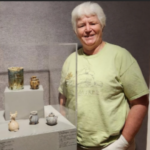
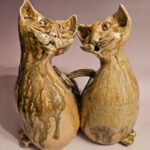
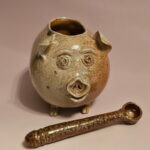
“I began my interest in ceramic forms and firing styles years ago as a collector, and kept asking myself, “I wonder how that was made?” In 2007 I was gifted wheel throwing lessons at a local community studio in Columbus, GA. In 2008, I participated in my first wood firing at Jon Brinley’s old kiln in Midland, GA. While I have no formal training other than my initial classes, I have participated in kiln builds, and nearly 40 firings in 5 different kilns since, gaining invaluable work experience with the wood fire process along the way.
My area of interest in the craft include miniatures, where I throw the “body” and then hand build and alter them. I also enjoy southern styles of functional and folk pottery.
My greatest blessings are the friendships I have developed with other dedicated wood fire potters. It takes special people willing to put in a lot of work for a successful firing. I consider the wood-firing process a true labor of love and a great bonding experience.”
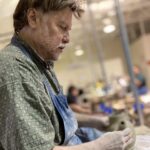
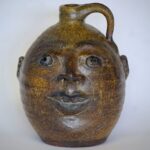
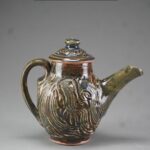
Stephen Hawks, born in Washington D. C., has lived most of his life in Georgia.
He has training in art, music, and theater, an AA in theater from South Georgia
College, a BFA from Valdosta State University, and an Interdisciplinary MFA, with
a concentration in ceramics from Florida State University with additional coarse
work in art education. He was Resident Potter at Westville living history museum
for 19 years and an independent artist for over 30 years. He is married with two
grown. Daughters. He came to Brownsville Texas in the fall of 2012 to teach at
UTB, courses in Ceramics, Graduate Art Ed, Art History, 3D Design, and Art
Appreciation. Recently, he oversaw the ceramics program and taught foundations
in the School of Art and Design at The University of Texas Rio Grande Valley on
the Brownsville Campus. Stephen Hawks is also a poet and musician. He invites
collaboration across disciplines and supports this in his art and educational
practice.
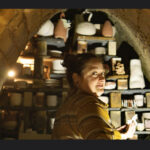
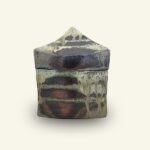
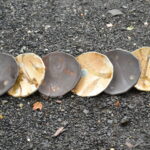
Kimberly Shelton earned their BFA in Ceramics from Georgia State University in 2007. The following year, they attended various workshops, allowing them to expand their understanding of clay materials and wood firing through the teachings of highly respected artisans. Kimberly relocated to Philadelphia, PA, where they trained as a Studio Technician at The Clay Studio. They began developing their teaching philosophy with the Clay Mobile outreach program and worked as an assistant to many local artists. Kimberly also facilitated community wood firings at Cheltenham Arts Center and curated a kiln retrospective exhibition. Philadelphia is also where their relationship with sustainable food networks was ignited. Working in urban agriculture influenced their connection between conscious tableware and slow food.
In 2015, Kimberly relocated to Whidbey Island, Washington to apprentice with Cook On Clay, an artisan flameware manufacturer. This allowed them to develop soda fired tableware while learning about the business of making ceramic cooking vessels. They returned to Georgia and attended their first professional residency at The Hambidge Center for the Creative Arts and Sciences. Kimberly has taught, assisted teaching artists, and attended workshops throughout the US, including Penland, Haystack, John C. Campbell Folk School, and Arrowmont School of Arts and Crafts. Currently, Kimberly resides in Atlanta, GA, where they manage a community pottery studio at Chastain Arts Center.
“I have found reprieve in the repetitive practice of manipulating clay, transforming earth through fire, into dense ceramics. Forming daily use-utilitarian objects that ideally bring enjoyment to others. I am drawn towards the warmth created in atmospheric firings, whether it is in the textured adornment of sodium vapor or the rough terrain of fly ash built up on a flame-facing surface. I embrace a deep-seeded connection between our food sources and the table we share. Dirt Dobber Wares is creating utilitarian wares to enhance the daily experiences for all who want to share a seat at the table.”